Cold Plunge for Beginners: A Complete Safety & Start Guide
What you need to know before your first plunge
Cold plunging is simple in theory — get into cold water, stay for a bit, get out. In practice, the first few sessions can be a shock if you do not know what to expect. Your body has a set of reflexes that kick in the moment you hit cold water, and understanding those reflexes is the difference between a productive session and a bad experience.
This guide covers the basics: how to prepare, what temperature to start at, how long to stay in, what safety checks matter, and what gear you actually need. No hype, no cold-exposure-as-religion stuff. Just the practical side.
The cold shock response: what it feels like
The first thing to understand is that the worst part of cold plunging is the first 30 seconds. When your body hits cold water, a reflex called the cold shock response kicks in. Your breathing becomes fast and hard to control, your heart rate spikes, and you get a strong urge to get out immediately. This is normal. It is not a sign that something is wrong.
The cold shock response peaks in the first 30 to 60 seconds and then starts to fade. If you can get through that first minute without panicking, the rest of the session is usually manageable. The key is to focus entirely on your breathing. Slow, deliberate exhales. In through the nose, out through the mouth. Do not try to fight the cold — just breathe through it.
The drowning physiology literature identifies uncontrolled breathing and gasping as primary risk factors in cold water. Getting your breathing under control is not just a comfort issue — it is a safety issue.[2]
Safety check: should you cold plunge at all?
Cold exposure is not safe for everyone. The Harvard Health review of the research is clear: cold-water immersions are generally considered safe for most people, but anyone with certain conditions should check with a doctor first.[3]
Talk to a doctor before starting if any of these apply to you:
- Heart disease or an irregular heartbeat
- High blood pressure that is not well controlled
- Diabetes (especially if you have neuropathy or circulation issues)
- Poor circulation or Raynaud's disease
- Epilepsy or a seizure disorder
- Pregnancy
- You are over 60 and have not done cold exposure before
If you plunge alone — which most people do at home — your margin for error is smaller. There is no one there to help if you get into trouble. Start shorter and warmer than you think you need to.[3], [2]
What temperature to start at
Beginners should start at 12–15°C (54–59°F). This might not sound very cold, but it is cold enough to trigger a genuine cold response. The PLOS 2025 meta-analysis of 11 studies used water from 7°C to 15°C, with most research settling in the 10–15°C range.[4]
Starting warmer gives you time to learn how your body reacts. You can always go colder later. Starting too cold on day one is how people develop an instant aversion to cold plunging and never try again.
- First session: 14–15°C for 30–60 seconds. Just get in, breathe, and get out.
- First week: 12–15°C for 1 minute, 3 times. Your breathing should settle faster by session three.
- Weeks 2–4: 10–14°C for 1–3 minutes. Gradually increase time before dropping temperature.
- After month one: 10–12°C for 2–4 minutes is a solid baseline. Stay here unless you specifically want to go colder.
How long to stay in
Duration follows temperature. In the 12–15°C range, a beginner can safely start with 30 seconds to 1 minute. The goal is not to see how long you can last — it is to build the habit of controlled breathing in cold water.
Søberg's observation of regular cold-water swimmers found they averaged about 11 minutes per week, spread over 2–3 sessions. That is a useful long-term target. For a beginner: 1 minute, 3 times per week, totals 3 minutes per week. Build up from there.[1]
What you actually need
Unlike what social media might suggest, you do not need a lot of gear to start cold plunging:
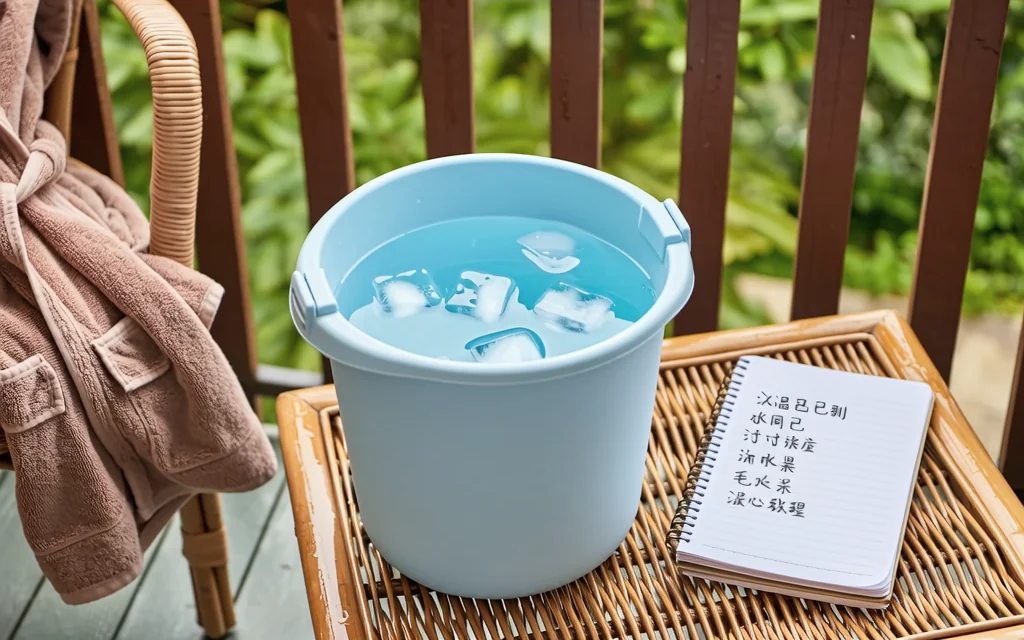
- A container: A bathtub works. So does a stock tank, a plastic storage bin, or a dedicated plunge tub. The container just needs to hold enough water to cover your torso. Size matters less than consistency.
- A thermometer: A $10 digital kitchen thermometer is fine. Knowing the exact temperature is the single most useful piece of data you can have. Do not guess.
- A towel and warm clothes: Have them ready before you get in. The after-drop — where your core temperature keeps dropping after you get out — is real, and having warm clothes within reach makes the exit much more pleasant.
- Optional but nice: a timer or stopwatch. You can use the free timer on this site.
Common beginner mistakes
- Starting too cold. 15°C feels wimpy until you get in. Start warmer and work down. There is no prize for hitting 5°C on day one.
- Staying too long. The urge to prove something is strong. Short and regular beats long and occasional. Your first session should leave you wanting slightly more, not swearing you will never do it again.
- Not warming up properly after. Have your towel and clothes ready. Walk around, do light movement, drink something warm. Sitting still after a cold plunge prolongs the after-drop.
- Comparing yourself to social media. The person doing 5 minutes in 4°C water on Instagram has been doing this for months or years. Your 1 minute in 14°C is a perfectly valid starting point.
Questions people actually ask
Is it safe to cold plunge every day as a beginner?
Starting with daily plunges as a beginner is not necessary and may increase your risk. Your body needs time to adapt to cold exposure. Three times per week is enough to build the habit and see adaptation. You can increase frequency after a few weeks if you want to.
Do I need to take a cold shower first to prepare?
No. Cold showers and cold plunges are different experiences — a plunge immerses more of your body and triggers a stronger cold shock response. Starting with cold showers for a week or two can help you get used to the idea, but it is not a required step. Just start with warmer water and shorter times in your plunge.
What if I cannot control my breathing?
Get out. If your breathing is out of control after the first 30 seconds, the water is too cold for your current level. Try again with warmer water (add a few degrees) and a shorter time. Uncontrolled breathing in cold water is a genuine drowning risk — do not push through it.
How long until I stop dreading the cold?
Most people report that the dread fades significantly after 3–5 sessions. The cold shock response does not disappear, but your anticipation of it changes. After a few weeks, the "I do not want to get in" feeling becomes manageable. After a few months, some people start looking forward to it. Not everyone, but some.
Get your number
Use the free calculator to get a safe plunge time for your water temperature and build a weekly plan that fits your goal.
Open the calculator